Tbilisi is one of those cities that defies easy categorization. Founded in the 5th century AD according to legend by King Vakhtang I Gorgasali, who was led to the site by a wounded pheasant falling into a hot spring (the name Tbilisi derives from the Georgian word for “warm”), the Georgian capital blends 1,500 years of layered history with a confident modern identity. This guide covers where to go, what to do, and how to get around Tbilisi in 2026.
Tbilisi – City Overview
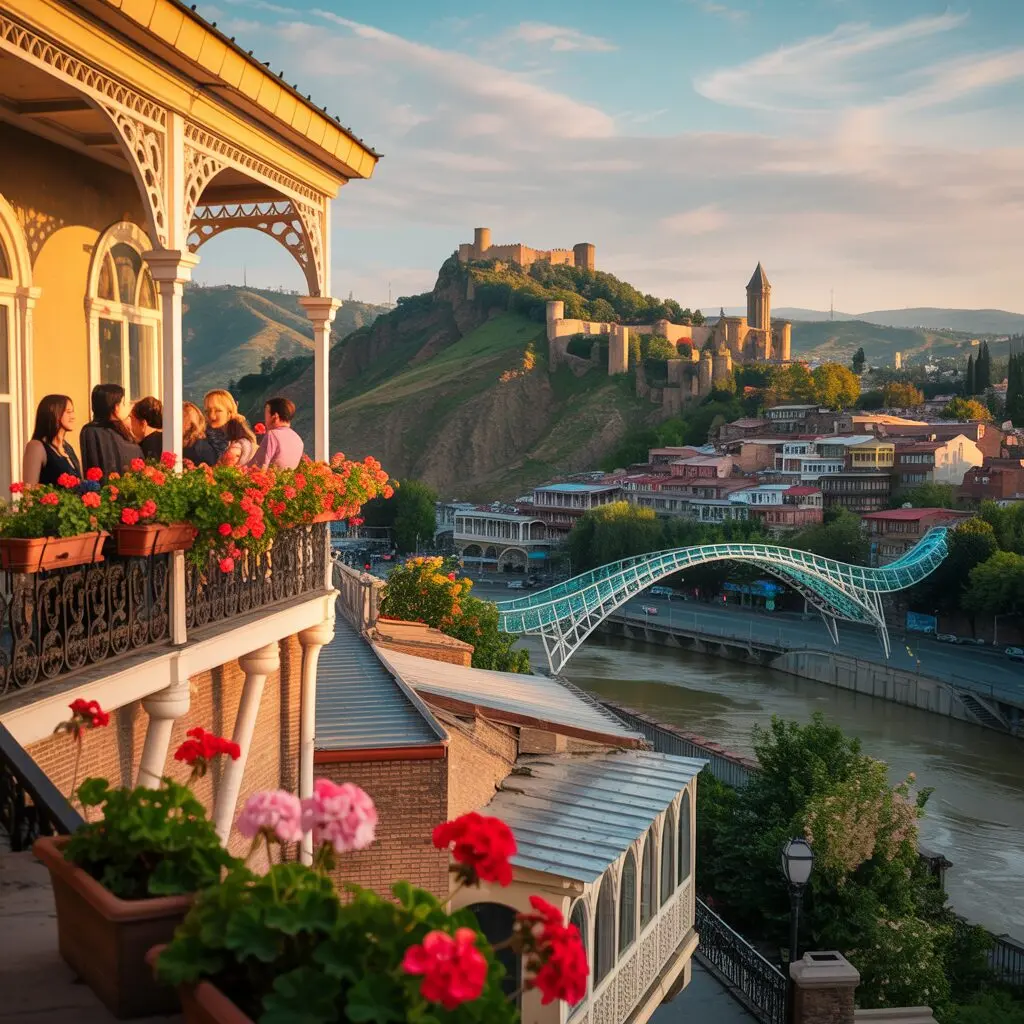
Tbilisi sits in the Kura River valley, surrounded by hills that made it a natural fortress throughout its turbulent history. The city has been sacked and rebuilt dozens of times – by Persians, Arabs, Mongols, and Turks – and each conquest left its mark. Today, Tbilisi is a city of extraordinary architectural contrast: crumbling Italianate balconies next to Soviet-era brutalism next to gleaming contemporary structures like the Bridge of Peace and the Georgian National Museum.
Population: approximately 1.2 million in the city proper. Georgia’s cultural, political, and economic capital.
Old Town (Altstadt / Kala)
The historic core of Tbilisi is the most atmospheric neighborhood for first-time visitors. Key highlights:
- Narikala Fortress – 4th century fortress overlooking the Old Town. Free to visit, accessible by cable car from Rike Park or on foot. Offers the best panoramic views of Tbilisi.
- Metekhi Church – 13th century church perched on a cliff above the Kura River. One of Tbilisi’s most photographed landmarks.
- Abanotubani (Sulfur Bath District) – Tbilisi’s famous sulfur bathhouses, recognizable by their beehive-shaped brick domes. Bathing in the natural sulfurous hot springs is a quintessential Tbilisi experience. Options range from private rooms to communal baths; book private rooms in advance.
- Anchiskhati Basilica – Tbilisi’s oldest surviving church, dating to the 6th century. Quiet and meditative, rarely crowded.
- Old Town walking streets – Shardeni Street and the surrounding lanes are lined with restaurants, wine bars, craft shops, and cafés in lovingly restored historic buildings.
Rustaveli Avenue and City Center
Tbilisi’s main boulevard runs through the heart of the modern city center. Key landmarks along and near Rustaveli:
- Freedom Square – Central hub with a golden column topped by Saint George slaying the dragon. Major metro and bus hub.
- Georgian National Museum – Houses extraordinary collections including the famous gold treasures of Colchis (the region associated with the Golden Fleece myth) and exhibits on Georgian history from prehistoric times.
- Rustaveli Theatre – Historic Georgian drama theater with a beautiful façade.
- Parliament Building – The parliament relocated to Kutaisi, so this now hosts other government functions.
Fabrika and Hipster Tbilisi
Fabrika, a converted Soviet sewing factory in the Chugureti neighborhood, is the epicenter of Tbilisi’s creative scene. The central courtyard houses container-based bars, cafés, a youth hostel, vintage shops, and food trucks. Open late, it is one of the best places to experience Tbilisi’s young, cosmopolitan energy.
The surrounding Chugureti and Vera neighborhoods have grown into Tbilisi’s most vibrant area for independent cafés, wine bars, and restaurants – with options spanning natural wine, craft beer, and international cuisine sitting alongside traditional Georgian chakapuli and khinkali spots.
Tbilisi Food – What to Eat
Georgian food is exceptional – complex flavors, walnut-heavy sauces, aromatic herbs, and unlimited bread. Must-try dishes in Tbilisi:
- Khinkali – Georgian soup dumplings. Thick dough filled with spiced meat broth. Eaten by holding the top twist (khudi) – do not eat it.
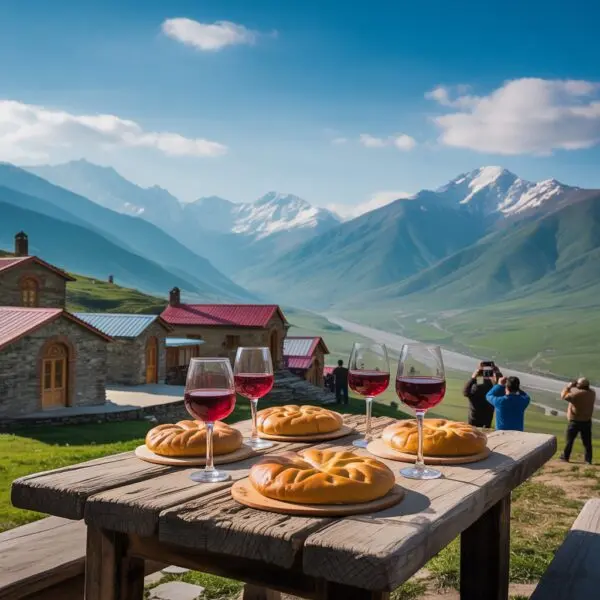
- Khachapuri – Georgia’s iconic cheese bread. The Adjarian version is a boat-shaped bread filled with molten cheese, topped with a raw egg and butter.
- Pkhali – Cold vegetable starters (spinach, beetroot, bean) blended with walnut paste and herbs. Often served as a set of colorful balls.
- Mtsvadi – Georgian shashlik (grilled skewers of meat). Beef and pork versions both excellent.
- Churchkhela – Grape must and walnut “candles” – a traditional Georgian candy.
Getting Around Tbilisi
- Metro – Two metro lines cover key areas. Fast and very cheap (~0.50 GEL per ride). Get a metro card at any station.
- Cable car – Runs from Rike Park to Narikala Fortress; also connects to the Kartlis Deda (Mother Georgia) statue area.
- Bolt/Yandex – Ride-hailing apps work excellently in Tbilisi. Very affordable.
- Walking – The Old Town and many central neighborhoods are best explored on foot. The hills are steep in places – wear comfortable shoes.
Day Trips from Tbilisi
- Mtskheta (20 min) – UNESCO-listed ancient capital of Georgia with the Svetitskhoveli Cathedral and Jvari monastery.
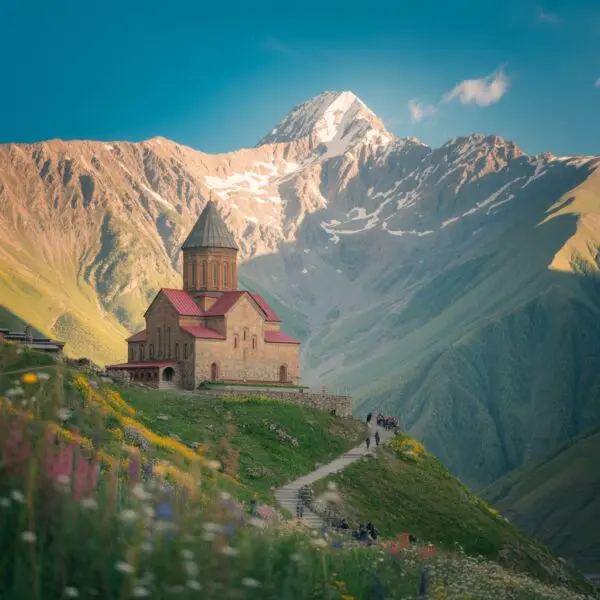
- Kazbegi (2.5 hr) – The iconic mountain destination. See our Kazbegi travel guide.
- Kakheti wine region (1.5-2 hr) – Wine tasting in Georgia’s primary wine country.
- David Gareja (1.5-2 hr) – Cave monastery complex on the Azerbaijan border, partial caves dating to 6th century.
Before traveling to Georgia, check your visa requirements and review the Georgia travel tips for practical preparation advice.
Frequently Asked Questions
How many days do I need in Tbilisi?
Minimum 2-3 days for the highlights (Old Town, Narikala, sulfur baths, Rustaveli, Fabrika). 4-5 days if you want to eat and drink your way through the food scene properly and do a day trip to Mtskheta. A week lets you explore thoroughly and venture into the wine regions.
Is Tbilisi expensive?
Tbilisi is very affordable by Western standards. A quality meal with Georgian wine at a mid-range restaurant: $15-30 per person. A night in a good guesthouse in the Old Town: $30-60. Budget hostel beds: $10-20. A metro ride: under $0.25. Tbilisi offers excellent value at every budget level.
What is the best neighborhood to stay in Tbilisi?
The Old Town (Altstadt) puts you in the most atmospheric setting and walking distance of major sights – ideal for first visits. Vera and Vake neighborhoods are quieter, more residential, and closer to expat-friendly restaurants. Fabrika/Chugureti is best for nightlife and the creative scene.
Do I need to book the sulfur baths in Tbilisi in advance?
Private sulfur bath rooms (the best experience) should be booked in advance, especially on weekends and in summer. Royal Bath, Orbeliani Baths, and Chreli-Abano are the most popular. Walk-in communal bath access is usually available but private rooms sell out. Prices: private rooms from 15-50 GEL per hour depending on the establishment.